
A Clinician's Guide to Clinical Informatics Careers
See how RNs move into clinical informatics roles, the certifications that matter (CPHIMS), and what these 74K–114K+ positions pay.
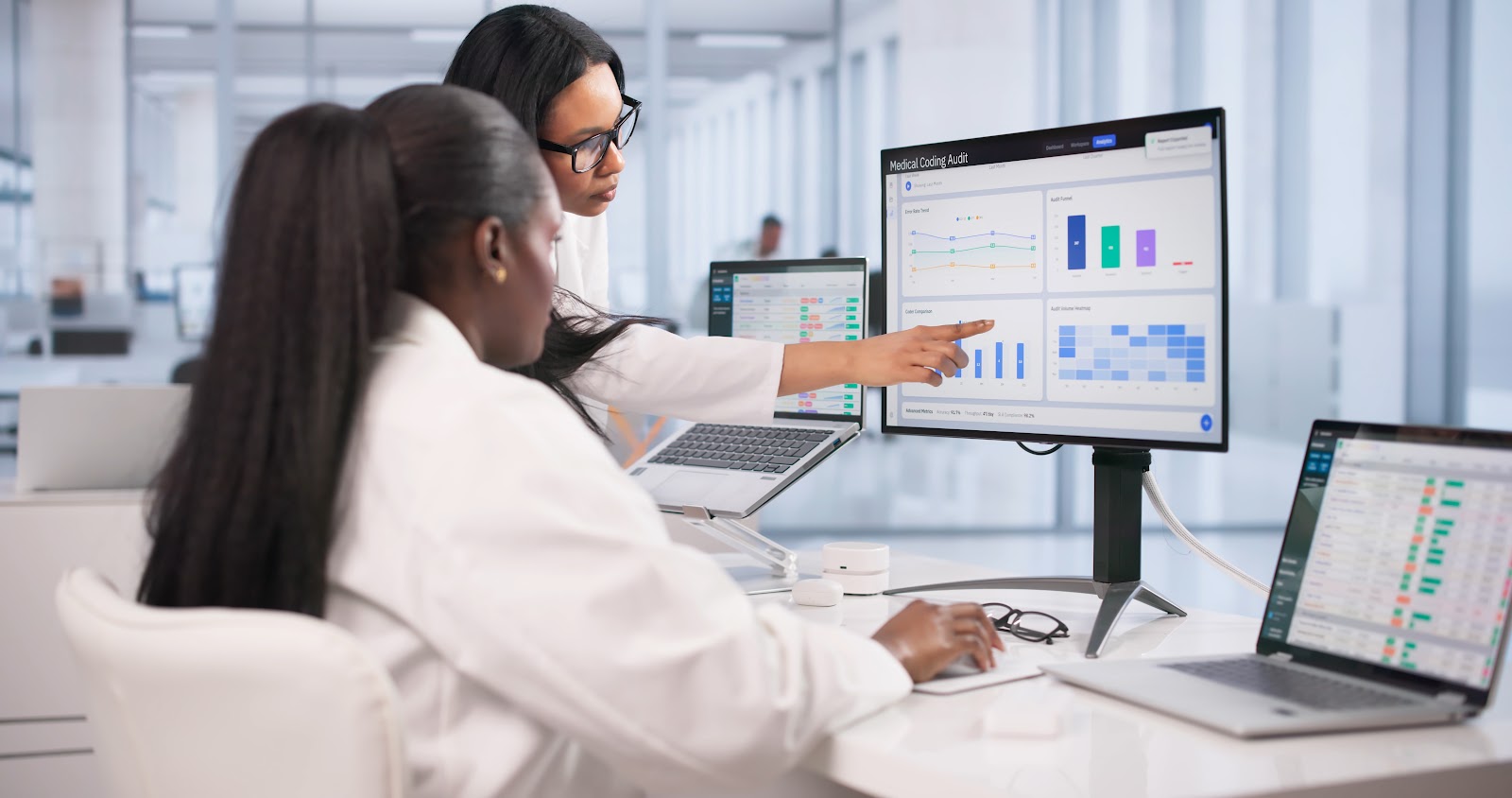
Clinical informatics sits at the intersection of healthcare, information technology, and data, helping organizations use technology to improve how care is delivered. Clinical informatics professionals streamline electronic health records (EHRs) to simplify how clinicians document and access information, which reduces errors and helps clinicians use data to improve patient outcomes. For clinicians looking to expand their impact beyond direct patient care, the field offers a range of career paths, with salaries ranging from about $69,000 to $200,000 depending on the role, experience, and setting.
Clinical informatics roles range from clinical informatics specialists and analysts to informatics nurses, physicians, and leadership positions. This guide explores the most common career paths, what employers look for, and the certifications that help clinicians build on their skills as they transition into non-clinical healthcare roles.
Key Takeaways
- Clinical informatics connects clinical expertise with technology and data to improve electronic health records, decision-making, and patient safety.
- Diverse informatics roles are available, including analysts and specialists, as well as physician or nursing informatics leaders.
- Technical skills, clinical knowledge, and relevant certifications strengthen your qualifications, though most certifications require some informatics-specific experience first.
What Is Clinical Informatics? (And How It Differs From Nursing Informatics)
Clinical informatics is the use of clinical knowledge, information technology, and data to improve how healthcare organizations collect, manage, and use information. These professionals work with systems including EHRs, clinical decision-support tools, and data platforms, and the field includes physicians, nurses, pharmacists, and other healthcare professionals.
Clinical informatics is the broader field. A Clinical Informatics Specialist (CIS) might configure an EHR, analyze clinical data, or translate clinicians' needs into technology requirements, while a Chief Medical Information Officer (CMIO) provides clinical leadership for health information technology.
Nursing informatics is a specialized area focused specifically on nursing practice, information, and technology. A Nursing Informatics Specialist might improve how nurses chart patient care or identify steps in documentation that create unnecessary work. A Nurse Informaticist brings nursing expertise to technology decisions, while a Chief Nursing Informatics Officer (CNIO) leads nursing informatics strategy at the department or facility level.
The distinction comes down to scope. Clinical informatics addresses workflow and information needs across many clinical disciplines. Nursing informatics focuses specifically on how technology supports nursing practice and outcomes. The fields overlap, and job titles aren't always consistent: a nurse can work in clinical informatics without holding a nursing informatics title, and vice versa.
Core Clinical Informatics Roles and Salaries
Clinical informatics is not a single role. The field includes jobs focused on clinical operations, EHR configuration, data analysis, and the connection between clinicians and technical teams. Salaries vary by experience, location, employer, and specialty.
These titles can overlap. A Clinical Informatics Specialist may work with clinicians to identify problems with documentation, then translate those problems into requirements for an IT team. An EHR Analyst is more likely to work directly with the system itself. An Informatics Nurse Specialist brings a nursing perspective to technology decisions, examining how nurses document care or testing whether an EHR change makes documentation easier and more accurate.
Technical Skills You'll Need
You don't need a computer science degree to enter clinical informatics. You can learn many of the necessary technical skills as you move into the field.
Epic and Cerner: Experience with major EHR platforms is useful since so many health systems use them, though it's not necessarily a prerequisite for every entry-level role.
SQL: A language used to retrieve and work with information stored in databases. Even basic SQL knowledge can help you understand how clinical data is structured.
HL7 and FHIR: Standards that help healthcare systems exchange information. You don't need to be an engineer, but understanding what these do can make technical conversations easier.
The important point is you can learn these systems with less tech experience than you might assume. Clinical experience gives you something most technical professionals don't have: an understanding of patient care and where technology creates problems with it.
Certifications and Credentials That Matter
There's no single certification or graduate degree required for every clinical informatics job. For many clinicians, existing experience plus targeted informatics training can be enough to qualify for an entry-level position, before pursuing formal certification later.
Nursing Informatics: RN Certification and BSN Preferences
For nursing informatics roles, an active RN license is necessary. Some employers prefer or require a BSN, particularly for specialist or leadership positions.
The American Nurses Credentialing Center's Informatics Nursing Certification (NI-BC) is the established credential for nurses in this specialty, but it isn't a first-step credential: eligibility requires at least two years of full-time RN practice plus either 2,000 hours of informatics nursing practice within the last three years, or 1,000 hours plus 12 semester hours of graduate-level informatics coursework. In practice, this means NI-BC is something to work toward once you've spent time in an informatics role, not a credential you pursue on day one.
CPHIMS Certification
The Certified Professional in Healthcare Information and Management Systems (CPHIMS) credential, offered by the Healthcare Information and Management Systems Society, is relevant to clinicians moving into broader health IT and informatics roles.
Like NI-BC, CPHIMS requires experience you'll build after you're already in the field: a bachelor's degree plus five years of information and management systems experience (three in healthcare), or a graduate degree plus three years (two in healthcare). It's best thought of as a mid-career credential rather than an entry point.
How Much Clinical Experience Do You Need?
Clinical experience carries significant weight in informatics because you already understand the environment the technology supports. A nurse with years of charting in an EHR has firsthand knowledge of where documentation hangs up or creates opportunities for mistakes.
That experience doesn't replace every technical skill, but you don't need to return to school for a full graduate degree, and you don't need NI-BC or CPHIMS to land your first informatics role, since both are credentials you grow into rather than requirements to get started. A master's degree can be valuable for advanced or leadership positions, but for most roles, a combination of clinical experience, technical skills, and targeted coursework offers a practical path in.
How to Position Your RN Background for Informatics Roles
Don't explain away your RN background when applying for an informatics role. That's your strongest qualification. The key is showing employers how your clinical experience applies to technology, data, and process improvement.
Start by naming what's relevant: training colleagues on EHR, troubleshooting documentation problems, participating in a system rollout, reducing duplicate charting, or using clinical data to support a quality-improvement project. Specific examples beat vague claims like "EHR experience."
MatchDay's coaches can help you build a resume and LinkedIn profile that positions you as someone with clinical expertise plus a genuine interest in healthcare technology, not just an RN looking for a change. MatchDay's team also helps you prepare to explain how your background helps you spot problems others might miss, and to speak clearly about the technical skills you're learning and why. MatchDay's coaches bring 2,500+ hours of experience with this exact transition, so you're not figuring it out alone.
There's also a practical advantage to learning from people who've already made the transition. Our fellows open doors for new fellows.
Not sure how your background maps to informatics yet? Start with the Free Career Assessment to see which roles fit before committing to anything bigger.
Ready to put your RN experience to work in a new direction?
See If You Qualify.
Clinical Experience Has a Place in Informatics
Transitioning into informatics doesn't require you to leave your clinical knowledge behind. It gives you a way to apply that knowledge to the systems, data, and technology that affect direct patient care.
Some clinicians prefer an EHR-focused role such as EHR Analyst. Others want nursing informatics, clinical systems analysis, or eventually informatics leadership. The path depends on your background and the work you want.
You may build technical skills or work toward a certification like CPHIMS or NI-BC down the road, but neither is something you need on day one. Your clinical experience is already a foundation informatics employers value.
The next step is learning how to present that experience. See If You Qualify and turn your clinical background into an informatics career.
Frequently Asked Questions
Do you need a master's degree for clinical informatics? No. A master's in clinical or health informatics can help for advanced or leadership positions, but isn't required for every role. Clinical experience, technical skills, and targeted training may be enough for many entry-level and mid-level positions.
Do you need bedside experience before moving into informatics? Clinical experience strengthens your candidacy by giving you firsthand knowledge of patient care and the technology clinicians use, though employers set their own requirements and some entry-level roles may need less.
Are clinical informatics jobs available remotely? Yes, particularly roles focused on EHR analysis, data, or systems support. Roles involving onsite training or direct collaboration with clinical teams may require some in-person work.
What's the salary ceiling for clinical informatics careers? There's no single ceiling. Compensation increases with experience, technical expertise, specialization, and leadership responsibility, particularly in senior physician informatics, director, and executive roles.
How long does it take to earn a clinical informatics certification? Longer than most people expect, since both major certifications require prior informatics-specific experience, not just clinical background. NI-BC requires two years of RN practice plus 2,000 hours of informatics nursing practice (or a shorter hours-plus-coursework path). CPHIMS requires three to five years of information and management systems experience depending on your degree level. Plan to build informatics experience for a year or two before pursuing either credential.
See If You Qualify

.avif)